Deep Unsupervised Learning Group is a research group at cairo.thws, focusing on developing novel approaches to machine learning, deep learning, and intelligent systems. Our work spans theoretical foundations and practical applications, bridging the gap between cutting-edge research and real-world impact.

Recent News

  • CAIRO.thws at ECML PKDD 2025 in Porto
    Fri, 3 Oct 2025
  • Magda recognlised as TMLR Expert Reviewer for her exemplary work as a reviewer and action editor.
    Thu, 25 Sep 2025
More News

Highlight

TTZ-Kitzingen

CAIRO.thws at ECML PKDD 2025 in Porto

Our research team – Prof Dr Magda Gregorová, Philipp Väth, and Dibyanshu Kumar – had an amazing week at ECML PKDD 2025, the top European conference on Machine Learning. With more than 1,300 participants, it was the perfect place to share ideas and connect with the community.

Read More

Group Lead

Magda Gregorova

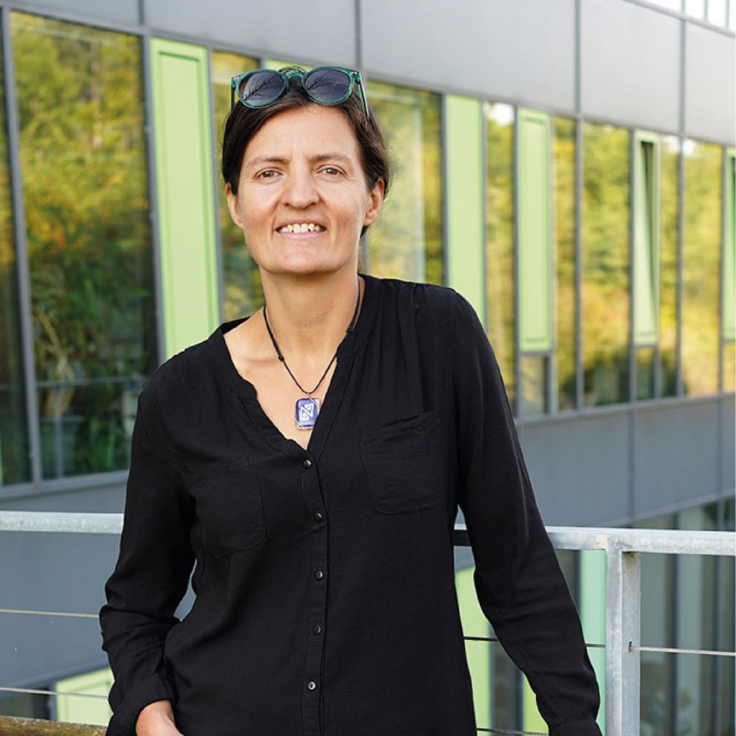
Prof. Dr. Magda Gregorová

Prof. Dr. Magda Gregorová is a Professor of Representation and Learning in Artificial Intelligence at the Technical University of Applied Sciences Würzburg-Schweinfurt (THWS) in Germany, where she is a founding member of the Center for Artificial Intelligence (CAIRO). Her research focuses on deep unsupervised learning methods and generative modeling, and she teaches in THWS's AI master's program.

Team members

Contact us!

Get in Touch

We welcome inquiries from prospective students, collaborators, and industry partners. Feel free to reach out to learn more about our research or discuss potential collaborations.

For general inquiries about the Center for Artificial Intelligence (CAIRO), please contact at cairo@thws.de.

Contact us!

Featured Projects

Neural architecture project

ML-EMPerform: ML surrogate modeling of electrical motor performance

Running Valeo 2025-2026

Dibyanshu Kumar

In partnership with with Valeo eAutomotive Germany GmbH, this project aims to develop deep learning (DL) methods for predicting the performance of EM bypassing the FEM-based simulation methods. The surrogate DL methods shall be significantly faster than the FEM-based simulations allowing for notable speed-ups in the EM design process.

Neural architecture project

PhysioINK - data analysis and active planning of an experimental study

Running Fraunhofer 2025-2027

Maximilian Münch

The overall goal of the project is the development of "quality" bio-ink that enables the printing of physiological tissues. The task of THWS is to support researchers and developers in the life science field by using modern methods of artificial intelligence and experimental design, employing a central database and data analysis system provided for the partners. Innovative solutions provided by THWS through data analysis should offer optimal, accelerated, and targeted methods, as well as variation possibilities for the development and production of the bio-ink.

Neural architecture project

KI Transfer

Closed 2023-2025

A. Balzer, M. Gregorova, L. Fichtel, M. Münch

The AI Regional Center Würzburg supports medium-sized businesses with artificial intelligence implementation, offering guidance on use cases, staff training, and long-term AI strategy development. Working with CAIRO, FIW, and the AI-Transfer Plus Program, it connects research with practical applications. The 9-month AI-Transfer Plus Program helps companies build internal expertise, implement customized AI solutions, and develop strategic capabilities, featuring upskilling and hands-on exploration phases.

Learn More →

Our Team

Meet the researchers driving innovation in representation learning and AI

Prof. Dr. Magda Gregorová

Prof. Magda Gregorová

Group Lead

magda.gregorova@thws.de
Research Interests:

Machine learning, Statistical learning

Dr. Name

Philipp Väth

PhD Student

philipp.vaeth@thws.de
Research Interests:

Deep Learning, AIGenerative Modeling, Diffusion Models

PhD Student

Dibyanshu Kumar

PhD Student

dibyanshu.kumar@thws.de
Research Interests:

Deep generative modeling, Physics informed machine learning.

PhD Student

Maximilian Münch

Postdoc

maximilian.muench@thws.de
Research Interests:

Machine Learning, Data Mining, Kernel Methods, Structured Data, Heterogeneous Data

Current Master Students

Aniket Kuklarni Thesis title: Exploration of Brain-Inspired Networks on Neuromorphic Hardware
Fikrat Mutallimov Thesis title: SVG image generation for fashion design
Omar Mohamed Junior Research Collaborator

Recent Publications

Publication 1

Diffusion Classifier Guidance for Non-robust Classifiers

P. Vaeth, D. Kumar, B. Paassen, M. Gregorova

The research extends diffusion model guidance to work with standard classifiers not trained on noise, unlike previous methods requiring robust classifiers. After analyzing classifier sensitivity on multiple datasets, researchers found non-robust classifiers produce unstable gradients under noise. Their solution uses one-step denoised predictions with stochastic optimization techniques like exponential moving averages, resulting in stable guidance that maintains sample diversity and quality.

Publication 2

Loss Functions in Diffusion Models: A Comparative Study

D. Kumar, P. Vaeth, M. Gregorova

This paper provides a comprehensive analysis of diffusion model loss functions, examining various formulations developed over recent years. The authors unify these objectives under the variational lower bound framework, offering both theoretical connections and empirical evaluations. Their research reveals when different objectives perform differently and which factors drive these variations. The study also assesses how loss function choice affects specific outcomes like sample quality and likelihood estimation.

Publication 3

Variational Autoencoder Based Multiobjective Topology Optimization of Electrical Machines Using Vector Graphics

M. Heroth, H. C. Schmid, M. Gregorová, R. Herrler, W. Hofmann

This paper introduces a vector-based approach for modeling and optimizing electric vehicle motor designs, addressing limitations of traditional variable-specific. Using a variational autoencoder trained on motor geometries. The method produces results comparable to current techniques while offering direct import into simulation for validation.

Publication 4

Variational autoencoder based techniques for a streamlined cross-topology modeling and optimization workflow in electrical drives

M. Benkert, M. Heroth, R. Herrler, M. Gregorová, H. C. Schmid

This paper enhances deep learning approaches for electrical machine simulation and optimization, addressing the time and resource constraints of traditional finite element analysis. The authors propose improvements to make both training and optimization processes more robust and efficient, while providing comparison with previously VAEs methods.

Teaching

Explore opportunities for advanced research and development in AI and machine learning

Generative Models

Loss Functions in Diffusion Models: A Comparative Study

M.Sc. Thesis

Student: Dibyanshu Kumar

This thesis comprehensively explores various loss functions in diffusion models, unifying them under the variational lower bound objective framework. Through theoretical analysis and empirical studies, it examines how different objectives affect performance under various conditions and investigates.

Generative Models

Sugar-beet Stress Detection using Satellite Image Time Series

M.Sc. Thesis

Student: Bhumika Sadbhave

The thesis investigates stress detection in sugarbeet crops using Sentinel-2 image time series and various machine learning and deep learning models, with a focus on autoencoder based architectures. The primary objective is to build a stress detection pipeline that works with minimal supervision.

Generative Models

Determination of Drug Efficacy on Pancreatic Tumor 3D Spheroidal Tissues

M.Sc. Thesis

Student: Bibin Babu

This thesis addresses pancreatic tumor treatment challenges by ranking drug combinations and concentrations based on their efficacy. Using SimCLR self-supervised learning, it extracts features from bright-field microscopy images of 3D tumor tissue models to characterize drug-induced alterations over time.

Deep Learning Research

Electrical Engine Efficiency Prediction Bypassing Finite Element Analysis

M.Sc. Thesis

Student: Lilly Abraham

This thesis develops surrogate models to predict Key Performance Indicators for Permanent Magnet Synchronous Machine Electric Motors using geometric and physical parameters. The author creates a tabular representation of motor designs, applies Multi Linear Perceptron models.

Contact Us

Get in Touch

We welcome inquiries from prospective students, collaborators, and industry partners. Feel free to reach out to learn more about our research or discuss potential collaborations.

Address

Center for Artificial Intelligence (CAIRO)
Franz-Horn-Straße 2
97082 Würzburg, Germany